Why Certified Safety Glass Matters in Your Home
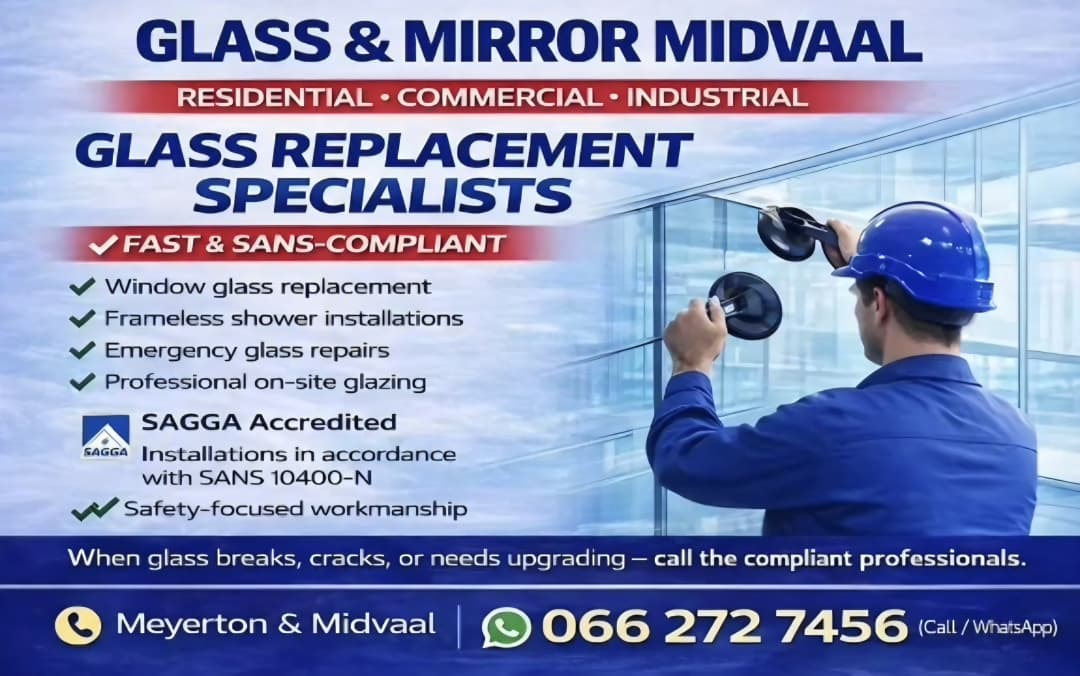
From Glass and Mirror Midvaal
Glass is part of almost every modern home. It lets in natural light, makes rooms feel bigger, and adds a clean, modern look. We see it in windows, doors, showers, mirrors, shopfronts, cupboards, and even tables.
But glass is not just about appearance. If the wrong type of glass is installed in the wrong place, it can become dangerous. That is why safety rules exist in South Africa — to protect families, visitors, and property owners.
Why Ordinary Glass Can Be Dangerous:
Standard glass breaks into long, sharp pieces. These sharp shards can cause serious injuries, especially in doors, low windows, and bathrooms where people may slip or fall into the glass.
Safety glass is designed differently. Toughened glass breaks into small blunt pieces instead of sharp blades. Laminated glass holds together even when cracked, reducing the chance of serious cuts. This is why safety glass is required in certain areas of a home.
The regulations Protects Homeowners:
In South Africa, building regulations clearly explain where safety glass must be used.
These rules are set out in SANS 10400-N
They apply to places such as:
Glass doors
Side panels next to doors
Low-level windows
Bathrooms and shower areas
Staircases and high-risk areas
These requirements are not there to make life difficult. They exist to prevent injuries and protect property owners from legal and financial loss.
How Do You Know Glass Is Safe?
Certified safety glass carries a small permanent mark, often called an acid stamp. This marking shows that the glass was tested and meets recognised safety standards. If there is no visible marking, it may not be compliant.
Homeowners should always make sure that the company supplying and installing the glass uses certified materials. Proper installation is just as important as the glass itself. Even good-quality glass can fail if it is not fitted correctly.
It is strongly recommended to use a professional glazing company, preferably one that is a member: South African Glass and Glazing Association. Members follow recognised industry standards and ethical practices, giving homeowners added peace of mind.
Glass Must Also Handle Wind and Weather
Glass is exposed to strong winds, temperature changes, and normal building movement. SANS 613 sets guidelines to make sure windows and doors can handle these conditions safely.
When glass and frames meet these standards, they are less likely to leak, crack, or loosen over time. This protects your home from long-term damage.
Even Furniture Glass Has Regulations
Glass used in cupboards, shelves, and display cabinets must also be safe. SANS 17 ensures that furniture glass is strong enough and properly supported for everyday use.
Although this may seem minor, broken furniture glass can also cause serious injuries.
Why This Matters to You:
Safety glass protects lives. It reduces the risk of serious injury, especially for children and elderly family members.
For tenants, it is wise to ask whether a property has a valid glazing certificate. This confirms that safety glass has been installed correctly.
For homeowners and buyers, compliance protects your investment. It supports insurance claims, reduces legal risk, and ensures your home meets building regulations.
When it comes to glass, choosing the correct type is not an upgrade, it is a responsibility.
Safety standards exist for a reason, and following them provides long-term peace of mind for everyone under your roof.
For professional advice or a glazing compliance assessment, contact:
Glass and Mirror Midvaal
066 272 7456
About the Author